Behaviour & Attitudes
High expectations. Positive relationships where every child matters. We are creating a school where children feel safe, respected, valued and ready to learn.
At Park Road Academy, we believe that every child has the right to feel safe, respected, included and able to learn.
Our approach to behaviour is built on high expectations, positive relationships, clear boundaries and a commitment to understanding the individual needs of every child.
We believe that positive behaviour must be taught, modelled, recognised and reinforced. Just as children learn to read, write and solve problems, they also learn how to manage emotions, build friendships, resolve disagreements and make responsible choices.
We recognise that children sometimes make mistakes. When behaviour falls below our expectations, we respond calmly, fairly and consistently, helping children understand the impact of their actions and supporting them to make better choices.
Our approach combines encouragement and recognition with clear, proportionate consequences. We consider individual circumstances, safeguarding and additional needs while maintaining high expectations for everyone.
Our ambition is for every child to develop the self-discipline, resilience, respect and responsibility they need to succeed both in school and beyond.
What We Expect at Park Road
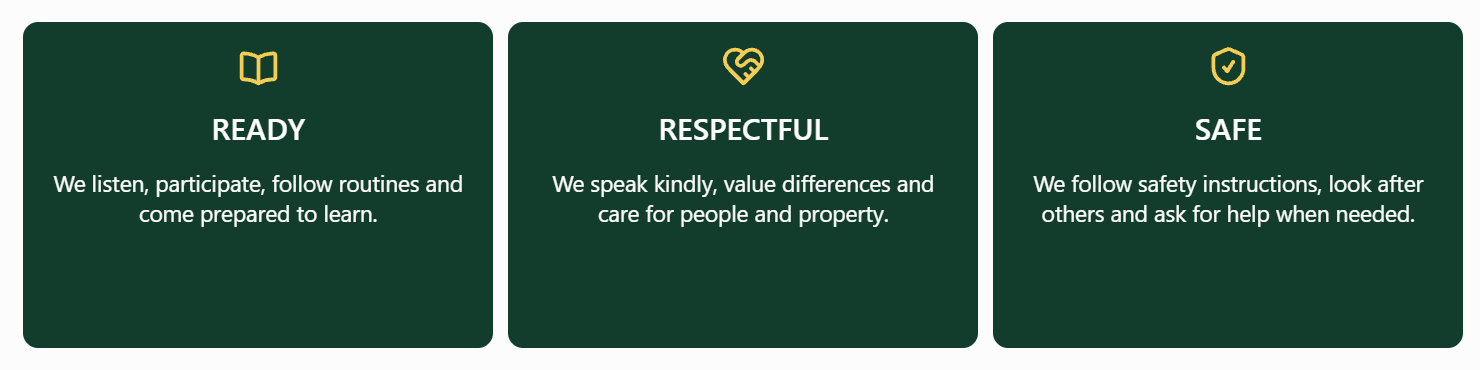
Our three behaviour expectations: Ready, Respectful, Safe to help everyone understand what positive behaviour looks like.
We teach these expectations explicitly and revisit them through classroom routines, assemblies, PSHE lessons and everyday school experiences.
Whether children are learning in the classroom, playing outside, attending clubs, taking part in school visits or representing Park Road in the community, we encourage them to demonstrate these expectations.
Our behaviour expectations are supported by our five PRAPS values: Pride, Resilience, Ambition, Perform and Succeed.
Together, these help children develop positive attitudes to learning, strong relationships and a sense of responsibility towards others.
Recognising and Celebrating Positive Behaviour
At Park Road Academy, we believe that positive behaviour deserves to be noticed, encouraged and celebrated.
Throughout the school day, staff recognise children who demonstrate our PRAPS values, make thoughtful choices, show kindness, persevere with challenges and contribute positively to school life.
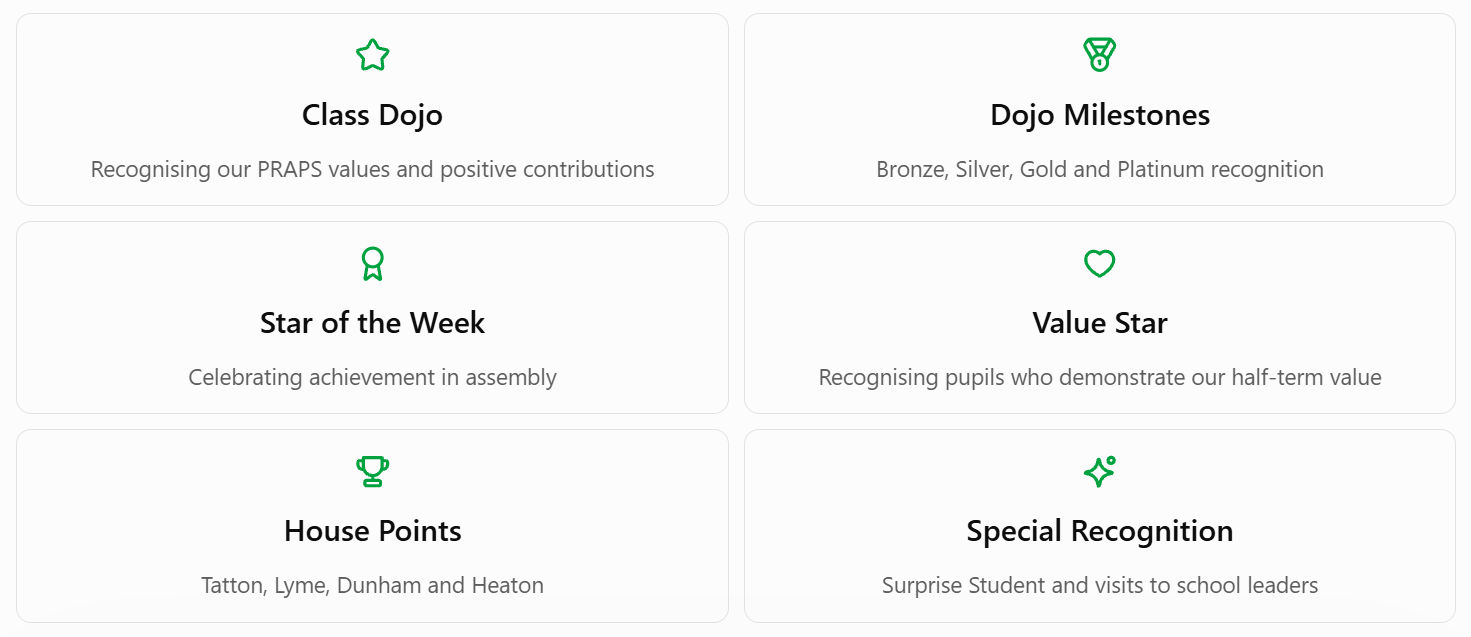
We celebrate success through verbal praise, Class Dojo points, certificates, Star of the Week, Value Star of the Half-Term and our House Points system.
Children can achieve Bronze, Silver, Gold and Platinum Dojo recognition, while our four school houses — Tatton, Lyme, Dunham and Heaton work towards winning the termly House Cup.
We also recognise exceptional positive behaviour and learning through visits to the Headteacher or Subject Leaders.
Our aim is to help children experience pride and satisfaction in doing the right thing, recognising that positive behaviour benefits themselves and the whole school community.
When Behaviour Falls Below Expectations
How We Respond:
-
Remind and redirect
Staff use calm reminders, non-verbal cues, encouragement and clear expectations to help children make positive choices.
-
Reflect and take responsibility
Where behaviour continues, children may be supported to reflect, apologise where appropriate or experience a proportionate consequence.
-
Provide additional support
More significant or persistent concerns may involve senior leaders, communication with parents, pastoral support or SENDCo involvement.
-
Respond to serious incidents
Where behaviour is serious or presents a risk, the school takes appropriate action to protect safety, maintain learning and provide support. Serious consequences are considered in accordance with the school exclusions policy and statutory guidance.
Helping Children Learn from Their Choices
At Park Road Academy, we believe that clear boundaries and fair consequences are an important part of helping children learn.
When behaviour falls below expectations, staff respond calmly and proportionately, considering the seriousness of the incident, whether behaviour has been repeated, its impact on others and the individual circumstances of the child.
Our responses may include reminders, reflection, adjustments within the classroom, proportionate loss of privileges, parental contact or additional support from senior leaders.
For serious or persistent behaviour, further consequences may be necessary in accordance with our Behaviour Policy.
We also recognise that a consequence is not the end of the process. Where appropriate, we support children to understand what happened, repair harm, rebuild relationships and return successfully to learning.
Our aim is always to maintain a safe and positive learning environment while
helping children develop responsibility and self-control.
An Inclusive Approach to Behaviour
We recognise that children develop at different rates and that some pupils may need additional support to manage their emotions, relationships and behaviour.
Behaviour can sometimes be influenced by special educational needs or disabilities (SEND), communication differences, sensory needs, medical conditions, emotional wellbeing or circumstances outside school.
Our approach combines high expectations with understanding, fairness and appropriate reasonable adjustments.
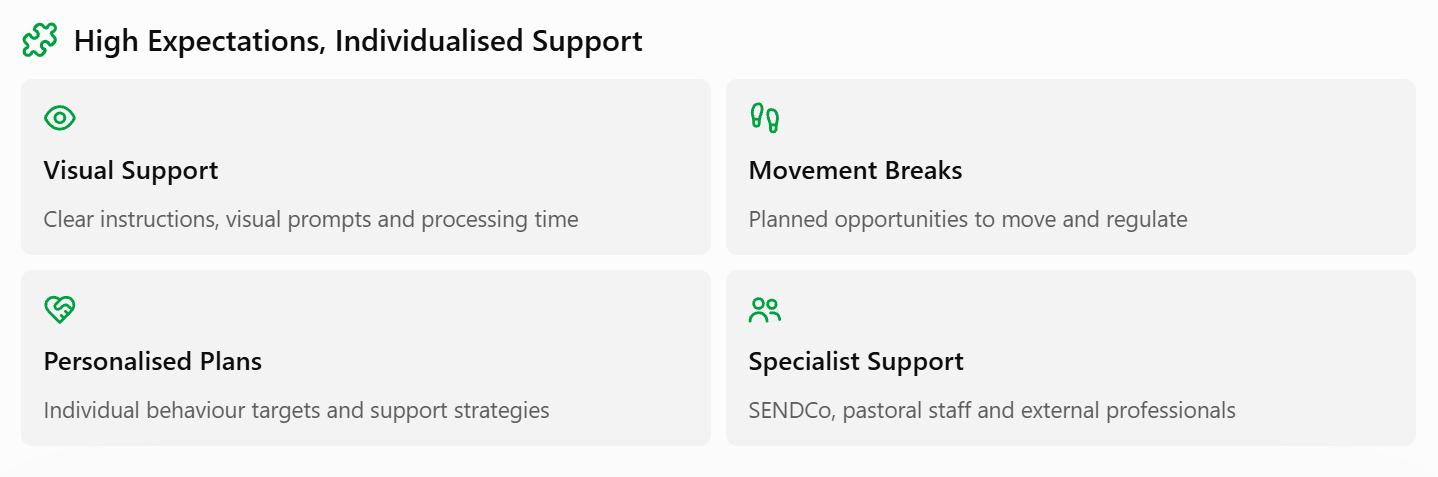
Where needed, we may provide visual supports, additional processing time, movement breaks, sensory regulation opportunities, personalised behaviour support plans or targeted pastoral interventions.
Our SENDCo works alongside staff, families and specialist professionals to identify needs and develop appropriate support.
Working Together Makes a Difference
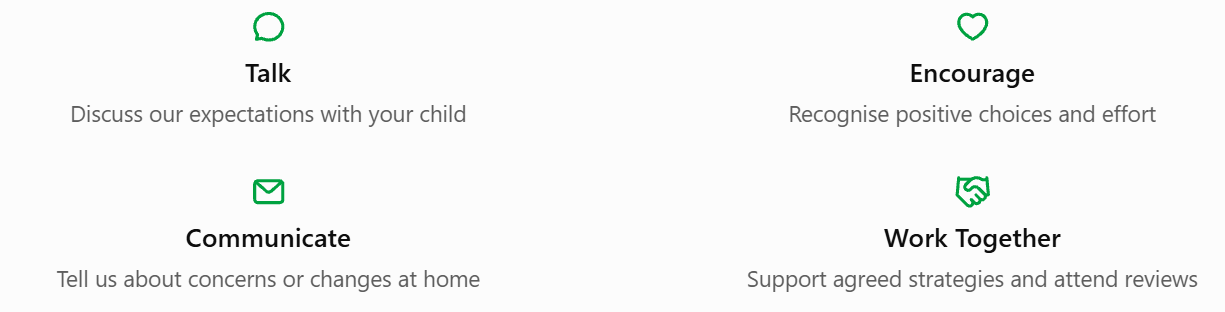
We know that children thrive when school and home share positive expectations and communicate openly.
If we contact you about your child's behaviour, please understand that our intention is to work in partnership with you. We are not simply reporting a problem; we want to help your child learn, develop and succeed. Sometimes children make mistakes, experience difficult emotions or need support to understand the impact of their actions. These are opportunities for learning, and your involvement can make a significant difference.
We ask parents and carers to support our Ready, Respectful, Safe expectations, reinforce positive choices at home, inform us of circumstances that may affect their child and work with staff when additional support is required.
Staff use professional judgement when deciding whether routine incidents require contact with home. We will communicate serious incidents, safeguarding concerns and significant consequences as soon as reasonably practicable.