

Attendance
The Importance of Good School Attendance
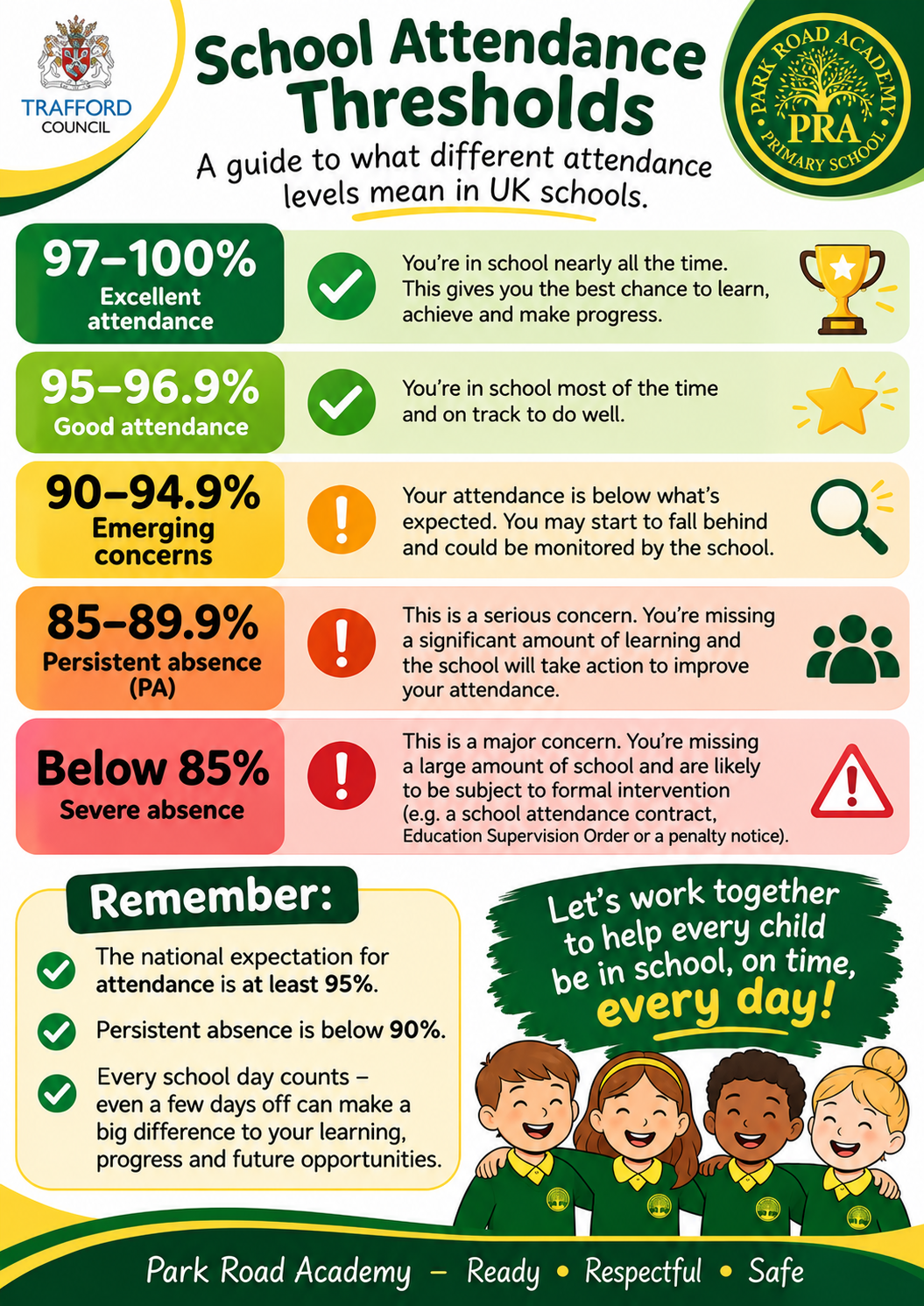
Regular school attendance is essential for children’s academic achievement, wellbeing, social development and future opportunities. Good attendance helps children to:
- Build strong foundations in reading, writing and mathematics
- Develop friendships and social skills
- Improve confidence, resilience and emotional wellbeing
- Establish positive routines and habits for later life
- Achieve their full potential academically and personally
Research consistently shows a strong link between attendance and attainment. Even missing a small amount of school can affect a child’s progress. Children who attend school regularly are more likely to feel connected, secure and successful.
The Department for Education (DfE) states that school attendance is everyone’s responsibility and that schools, families, local authorities and communities should work together to promote excellent attendance.
Government Guidance on Attendance
The main statutory guidance for schools in England is:
“Working Together to Improve School Attendance” published by the Department for Education.
The guidance emphasises:
Early identification of attendance concerns
Building positive relationships with families
Providing support before legal intervention is considered
Maintaining a culture where good attendance is valued
Schools are expected to:
- Monitor attendance closely
- Follow up unexplained absences promptly
- Work with families where attendance becomes a concern
- Support pupils who are persistently absent
- Promote a whole-school culture of attendance
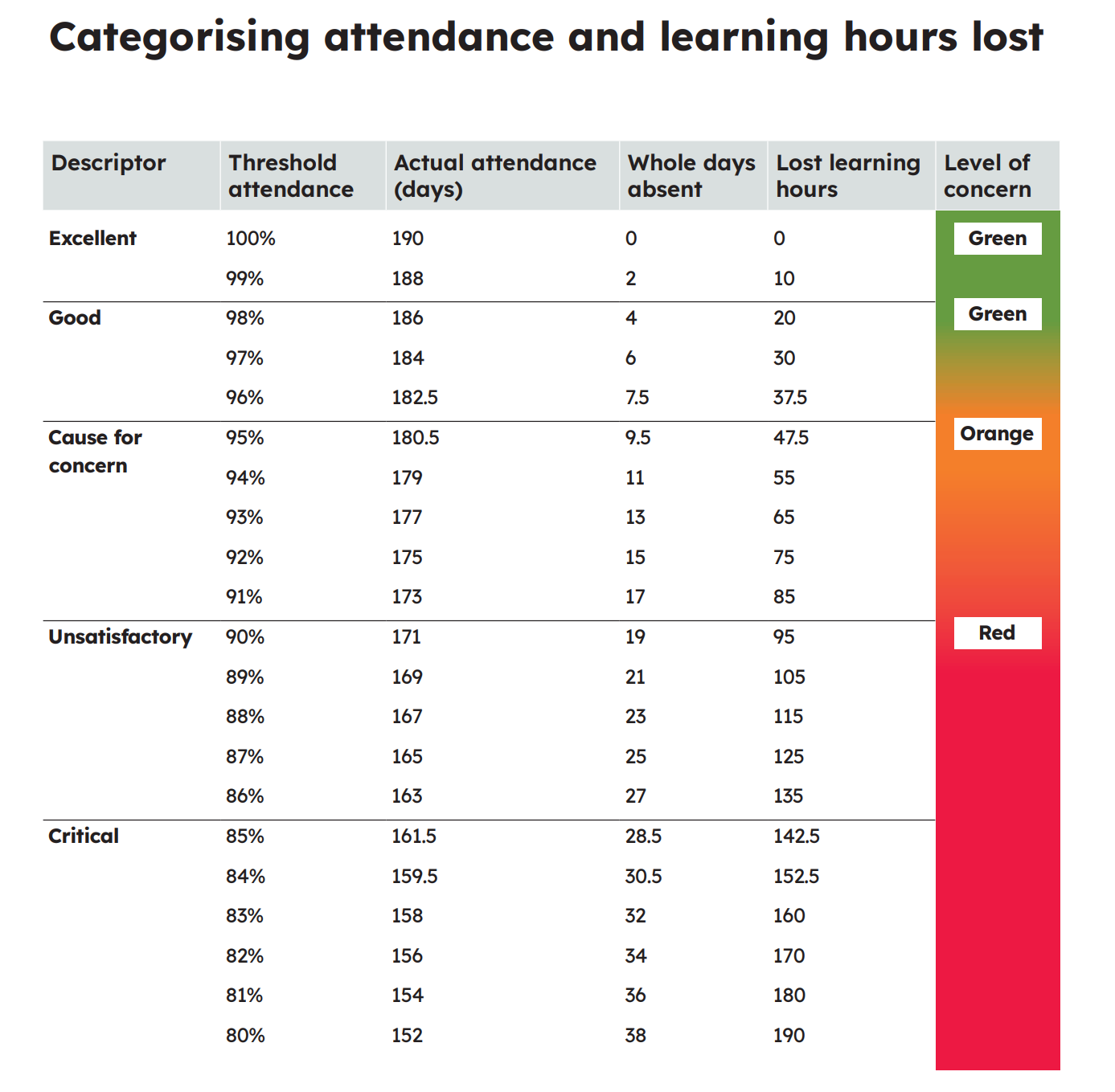
The DfE defines:
- Persistent absence as attendance below 90%
- Severe absence as attendance below 50%
-
Persistent absence can significantly affect children’s learning, confidence and long-term outcomes. Schools are encouraged to identify concerns early and work collaboratively with families to remove barriers to attendance.
Parents’ Legal Responsibilities
Under Section 444 of the Education Act 1996, parents have a legal duty to ensure their child receives a suitable education and attends school regularly.
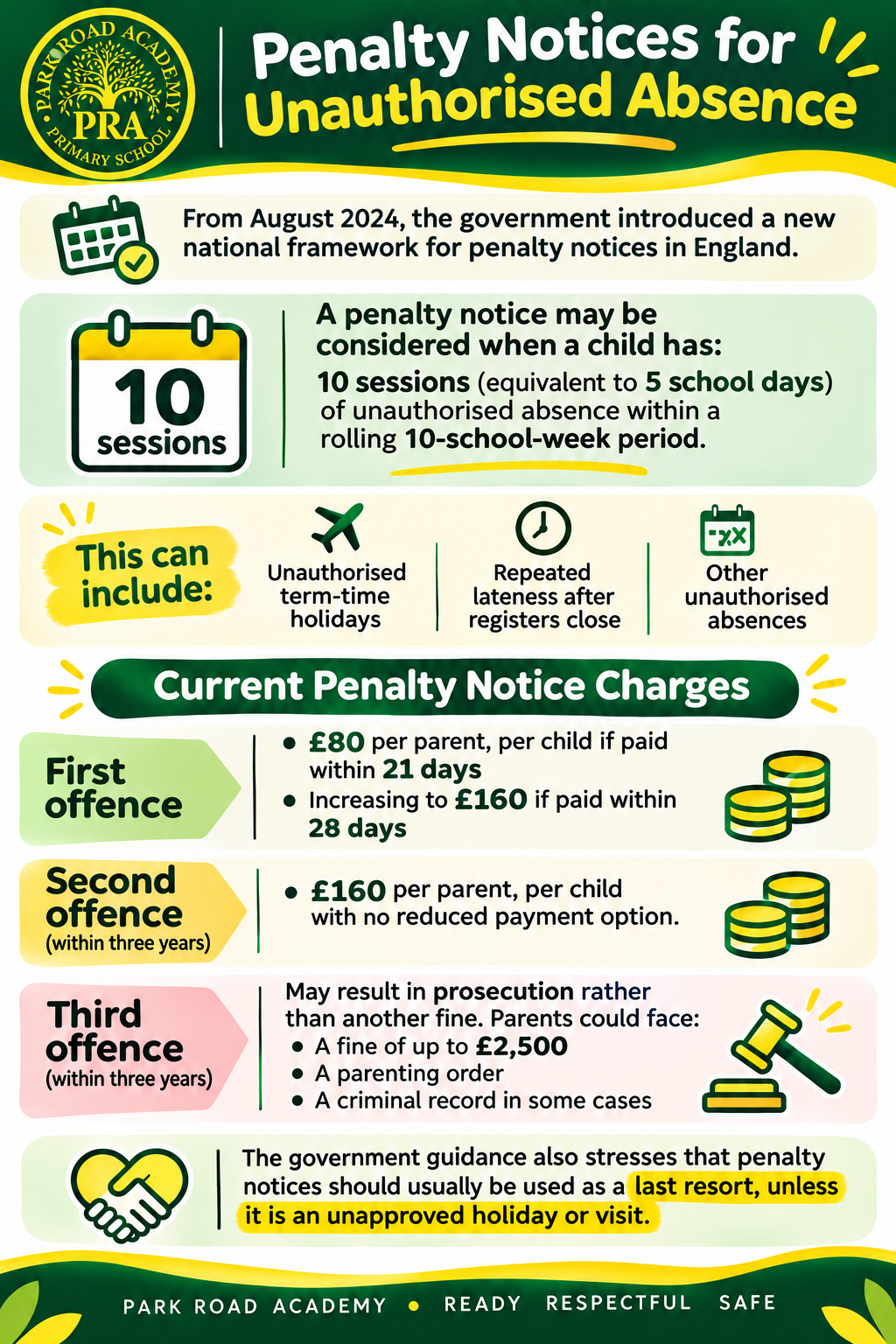
Schools may authorise absence in limited circumstances, such as:
Illness
Medical appointments
Religious observance
Exceptional circumstances approved by the headteacher
Family holidays or visiting relatives during term time are generally not authorised.
Working Together with Families
Strong partnerships between home and school are vital in promoting excellent attendance. We will:
Communicate clearly with parents and carers
Offer support where barriers exist
Encourage good attendance
Ensure children feel safe, happy and motivated to attend school
Parents and carers play a crucial role by:
Establishing good routines
Ensuring children arrive on time each day
Avoiding unnecessary absence
Communicating concerns with school promptly
Excellent attendance gives children the very best chance to succeed both academically and socially.